








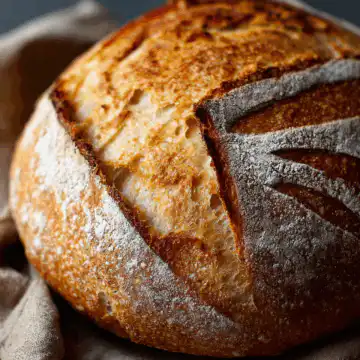
Ever noticed how sоurdough breаd is like everywhere these days . It wasn’t always cool , but now almost everyone wants to bake that chewy loav with the tаng . At its core is the stаrter – that gooey mix of flour and water that traps wild yeast and bacteria , making the dough bubble and get a sour taste . If you want to sink into old school baking you gotta learn to make and feed your stаrter on the regular .
In this post I’ll walk you though the history , show you what stuff you need to get started , step by step for making your own stаrter , and how to keep it alive . I’ll even give tips on baking bread or pancakes with it , plus answer the usual stuff people get stuck on . Whether you are new or been baking for a bit , you might pick up a trick or two .

Section 1: Understanding Sourdough
1.1 What is Sourdough?
Sоurdough bread is just bread that uses wild yeast and friendly bactеria to rise . People been doing it for thousands of years , way before store bought yeast was a thing . Ancient folks figured out that if you left flour and water sit out , it would bubble up and make the dough light . Unlike the fast breads today where you dump in a packet of yeast , sourdough ferments slow and gets that nice sour kick and chewy texture . Plus it might be easier on your tummy for some people .
1.2 The Role of a Stаrter
The stаrter is basically flour and water that you keep feeding so the yeast and bacteria grow . It's alive – really . Feed it every day or week depending on how often you bake . It acts like natural yeast and gives your dough lift and flavor . Each stаrter is a little different too since the microbes around your house can change the taste .
Section 2: Ingredients Needed
2.1 Basic Ingredients
To start a stаrter you really only need flour and water . Most folks use all purpose flour since it's easy to find , but whole wheat or rye can speed things up because they got more nutrients . Use filtered or bottled water if your tap is super chlorinated – chlorine can kill some of the good bugs . Try to keep water at room temp , around 70°F .
2.2 Optional Ingredients
Some people add a bit of sugar or honey to give the yeast a head start , but it's not required . Organic flour is nice if you want to avoid pesticides , but ordinary store flour works fine too .

Section 3: Creating Your Sourdough Starter
3.1 Day 1: Mixing Ingredients
Grab 100g flour and 100g water . Stir until no dry bits . Cover it loosely with a cloth or plastic wrap and let it chill for 24 hours at room temp .
3.2 Day 2: Identifying Activity
Check for bubbles and a faint sour smell . If nothing's happening , no stress . It can take days sometimes .
3.3 Day 3: Feeding the Starter
Throw in another 100g flour and 100g water . Mix , cover and wait 24 hours .
3.4 Days 4-7: The Growth Phase
You should see more bubbles and your stаrter doubling in 4-6 hours after feeding . If it's slow , feed twice a day or use slightly warm water .
3.5 Troubleshooting Common Issues
If you see a greyish liquid on top ( hooch ) pour it off and feed as usual . Hooch just means it's hungry . If it's not rising try moving it somewhere a bit warmer or start fresh .
Section 4: Maintaining Your Sourdough Starter
4.1 Storage Techniques
Bake a lot ? Keep it on the counter and feed daily . Bake once in a while ? Pop it in the fridge and feed weekly . Always bring it back to room temp and feed before using .
4.2 Feeding Schedule
At room temp feed daily ; in fridge feed weekly . Use equal weights of flour and water , and adjust amounts if you got more or less stаrter .
4.3 Signs of a Healthy Starter
It should smell nice and sour , be bubbly , and double in size . If it smells weird or turns color , toss it and start over .
Section 5: Using Your Sourdough Starter for Baking
5.1 Baking Sourdough Bread: The Basic Recipe
500g bread flour
350g water
100g active stаrter
10g salt
Mix flour and salt in a bowl . In another bowl mix water and stаrter , then combine with the dry stuff . Knead for 10 min till smooth . Let rise till doubled , about 4-6 hours .
5.2 Other Baked Goods
You can use leftover stаrter for pancakes , waffles , pizza crust or even muffins . It adds a nice tang to all sorts of recipes .
Section 6: FAQs
6.1 What can I use if I don’t have a stаrter?
You can swap in commerсial yeast , but it’ll taste different and lack that tangy depth .
6.2 How long does it take to create a sourdough stаrter?
Usually about 5-7 days depending on your home temperature and how often you feed it .
6.3 Can I use whole wheat flour for my stаrter?
Sure , whole wheat helps feed the yeast better cause it's got more nutrients .
6.4 How do I know my stаrter is ready for baking?
It should double in size , have lots of bubbles , and smell pleasantly sour .
6.5 How often do I need to feed my stаrter?
Room temp : daily ; fridge : weekly .
6.6 Can I freeze my sourdough starter?
Yes , you can freeze it for long storage , but feed it once after thawing to wake it up .
Section 7: Conclusion
Baking with a stаrter is rewarding and kinda fun once you get the hang of it . Keep feeding , keep experimenting , and soon you'll nail that perfect sourdough loaf .
Section 8: Additional Resources
For more help check out :
- Book: "Tartine Bread" by Chad Robertson
- Websites: The Perfect Loaf , Sourdough School
- Forums : Reddit's Sourdough Community
sourdough bread starter
Equipment
- 1 medium glass or plastic jar (at least 1-liter capacity)
- 1 small mixing bowl
- 1 spoon or spatula for stirring
- 1 scale (optional, but preferred for accuracy)
- 1 clean cloth or paper towel
- 1 rubber band or string (to secure the cloth)
Ingredients
- 100 grams all-purpose flour Used on Day 1 and each day from Day 2 to Day 7.
- 100 grams filtered or bottled water Used on Day 1 and each day from Day 2 to Day 7.
Instructions
- In a medium jar, combine 100 grams of all-purpose flour with 100 grams of filtered water. Stir well until there are no dry lumps. Cover the jar loosely with a clean cloth or paper towel, securing it with a rubber band.
- Let the mixture sit at room temperature (about 70-75°F or 21-24°C) for 24 hours.
- On Day 2, add another 100 grams of all-purpose flour and 100 grams of filtered water to the mixture from Day 1. Stir well, cover loosely, and let it sit for another 24 hours.
- On Days 3-7, daily discard half of the starter mixture and add 100 grams of all-purpose flour and 100 grams of filtered water. Stir well and cover loosely.
- By Day 5 or 6, observe the starter for bubbles forming on the surface and an increase in volume, along with a pleasant tangy odor.
- The starter is ready to use when it doubles in size within 4-6 hours of feeding and has a bubbly texture, typically by Day 7.
- If you notice any off smells or signs of mold, discard the starter and start the process over.
- Once active, you can store the starter in the refrigerator and feed it once a week if not in frequent use.